
Project Cargo and OOG Moves: What It Actually Takes to Get It Right
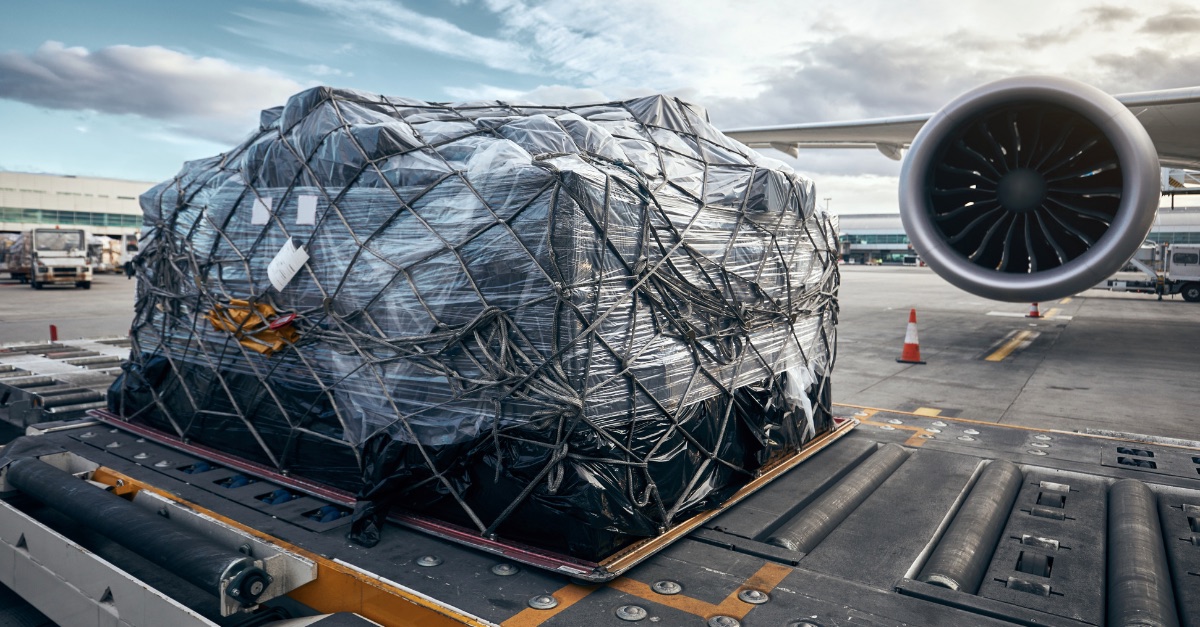
Project cargo means that there's a tower crane that made it from France to a free trade zone in Hillsboro, Texas — assembled as a complete unit, not in parts — because someone planned the routing right from the start.
The out-of-gauge pieces sailed direct from Le Havre to Savannah, moved in-bond to the FTZ. The containerized components traveled separately — trucked from France to Antwerp, then shipped direct to Houston. Different vessels, different ports, same destination, same deadline. The reason for splitting the routing wasn't cost. We worked with the manufacturer to learn which foreign terminals have the most experience lashing and securing their equipment. Antwerp was the solution.
That's what project cargo planning looks like when it's done right. Not just moving a big piece of freight — managing every decision point from origin to installation.
What Makes Project Cargo Different
Standard containerized freight has defined parameters. The box is the box. OOG and project cargo don't have that luxury.
Out-of-gauge freight — cargo that exceeds standard container dimensions in length, width, height, or weight — requires a completely different operational framework. The same applies to heavy-lift cargo, break-bulk, and machinery that can't be disassembled without compromising structural integrity or manufacturer warranty.
The freight itself is usually one-of-a-kind or low-volume. There's no playbook that covers every move. What there is: experienced judgment, a network of partners who've handled this category before, and the discipline to identify problems before the cargo is in motion.
The Planning Phase: Where the Move Is Won or Lost
For OOG and project cargo, cargo succeeds or fails beginning from the moment planning begins.
Equipment selection. The cargo determines the equipment, not the other way around. Flat racks, open tops, mafi trailers, step-deck or lowboy configurations inland — each choice has implications for lashing, securement, port handling, and what the receiving facility can actually accept. For break bulk, vessel selection matters just as much. Not every port has the crane capacity to handle every lift.
Routing. The most direct route is rarely the only consideration. Port infrastructure, crane ratings, draft restrictions, inland clearance heights, bridge weight limits, permit corridors — all of these shape which routing is viable.
Cargo protection. Can it get salty? What temperature range does it need? Does it require blocking, bracing, or custom cradles? For machinery with sensitive components, the inspection and protection plan starts at the origin — not when damage is discovered at the destination.
Documentation. Project cargo moves generate more paperwork, not less. Commercial invoices, packing lists, certificates of origin, dangerous goods declarations (where applicable), import permits, and any required end-use certifications must be in order before the cargo moves. A documentation gap on a standard container is an inconvenience. On a one-off heavy-lift move, it can mean weeks of delay and significant demurrage.
Permits, Escorts, and the Inland Leg
Oversized cargo moving by truck in the U.S. requires state-by-state oversize/overweight permits, and permit requirements, curfew windows, and restricted routes vary by state, by season, and sometimes by county.
Route surveys matter for heavy haul. Bridge postings, overhead utilities, turning radii, and road surface conditions must be confirmed before a heavy piece moves. Finding a clearance problem at a bridge with cargo on the truck is not the time to discover it.
Risk Management for Specialized Cargo
Machinery and heavy equipment have two properties that make risk management different from that for standard cargo: they're high-value and often irreplaceable on a short timeline.
Insurance. Standard cargo coverage isn't built for OOG moves. Coverage terms, declared values, and the specific conditions of carriage — including what happens if a carrier sub-contracts without notification — all need to be reviewed in advance for project cargo. If it's a $1.2M crane, the coverage conversation happens before booking, not after.
Carrier vetting. For specialized moves, who handles the cargo matters as much as how. We vet partners based on their specific experience with the cargo category, not just their general capabilities.
Contingency planning. What happens if the vessel skips the port? If the permit is delayed? If the crane at the receiving terminal is down? For project cargo where downstream installation crews are scheduled and equipment is interdependent, a delay is a cost event. Contingency isn't an afterthought — it's part of the original plan.
Customs strategy. For high-value capital equipment, the duty treatment matters. FTZ and bonded warehouse strategies can significantly affect the cash outlay on import. That's a conversation that happens at the planning stage, not at the port of entry.
Why Blue Ridge for Project Cargo
We're not a large global forwarder with a project cargo desk. We're a team that has managed tower cranes, out-of-gauge machinery, hazmat breakbulk, and complex multi-port routings — and done so with the kind of attention that only comes when the people making decisions are directly accountable for the outcome.
Our certifications cover IATA, DOT, and IMDG hazmat processes. Our domestic background means we understand what happens after the vessel discharges — the drayage coordination, the permit logistics, the terminal lifting. Our established relationships provide us with trusted partners in the ports that matter for project cargo moves.
If you're moving machinery, heavy equipment, or any cargo that doesn't fit neatly in a box, reach out before booking. That's when the planning decisions that determine the outcome actually happen.